Migrating to Iris
Ten years of answers. None of it wasted.
You don't have to choose between starting fresh and dragging a
stale library behind you. Iris imports your existing Q&A pairs from your legacy tool, a spreadsheet, or wherever they live, then cleans, de-duplicates, and assigns owners so day one feels like year ten.
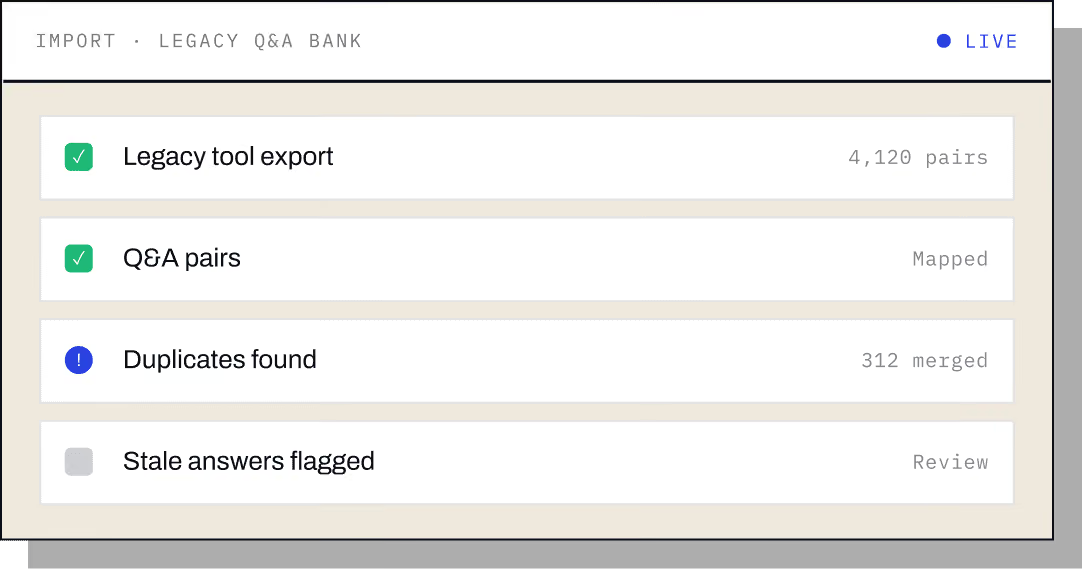
How migration works
From export
to living knowledge map.
Step 01
Export
Pull your Q&A pairs out of your legacy tool or a spreadsheet. Any format works.
Step 02
Import
Drop the file into Iris. Each pair lands as a draft Approved Answer, mapped to question, answer, and any tags you already had.
Step 03
Clean & group
Iris clusters similar questions, flags duplicates and contradictions, so you resolve them once.
Step 04
Assign & govern
Set owners, review cadences, and expiration dates. Your old bank becomes a governed, self-refreshing source of truth.
What carries over
Bring the
work. Leave the drift.
A legacy bank's problem was never the content, it was that nobody owned it and it quietly went stale. Iris keeps the content and fixes the rest.
Every Q&A pair
Imported intact
Questions, answers, and the tags you already maintained, imported intact, ready to use on the next response.
Owners & review cadence
Reviews itself
Assign each answer an owner and a renewal schedule, so the content reviews itself instead of rotting in place.
Conflict resolution
Pick the winner once
Iris finds the places your old bank contradicted itself and lets you pick the winner, once — then propagates it everywhere.
See it live
Bring your bank. We'll make it work harder.
Send us an export of your current library. We'll show you
what it looks like cleaned, grouped, and governed inside Iris,
in a 15-minute session.

"I love that I can build this from the ground up, but what about my ten years of work?"
It comes with you. We hear this on nearly every call, and the answer is simple: import it. Your historical Q&A pairs are a head start, not baggage. Iris ingests them, runs them through the same governance every other source gets, owners, expiration dates, similarity grouping, and surfaces contradictions so you can retire what's stale and keep what still wins.