AI Tech RFP Tools Comparison: A Buyer's Guide
November 12, 2025
By
Evie Secilmis

Your team’s time is its most valuable asset. So why does the traditional proposal process feel like such a time sink? Every hour spent digging for old answers is an hour lost. The right software can turn that cost center into a revenue driver, but choosing the right one is tough. This guide provides an honest ai tech rfp tools comparison, breaking down the key features of the best rfp ai software available. We'll help you find the best ai tool for answering rfps in tech so your team can stop searching and start strategizing, crafting winning proposals that deliver a clear return on investment.
Key Takeaways
- Focus on Strategy, Not Repetitive Tasks: An RFP AI tool automates the groundwork of finding answers and formatting documents, freeing up your team's time to personalize proposals, analyze client needs, and craft a narrative that wins the deal.
- Create a Central Knowledge Hub: The best RFP software relies on a single source of truth for all your approved content, ensuring every proposal is consistent and accurate. This eliminates the risk of using outdated information and builds client confidence.
- Plan for a Thoughtful Implementation: Choosing the right tool is only the first step. A successful rollout involves curating your knowledge base, training your team on new workflows, and regularly updating your content to get the best return on your investment.
What is an RFP AI Tool?
If you've ever felt buried under a mountain of RFPs, you know the process can be a grind. An RFP AI tool is designed to change that. Think of it as a smart assistant for your proposal team. At its core, RFP AI uses artificial intelligence to help automate how you respond to Requests for Proposal and other complex sales documents. It leverages sophisticated technology like natural language processing and generative models to understand the questions being asked, find the best answers from your company's content, and draft compelling responses.
This isn't just about a faster way to copy and paste. It’s about transforming a time-consuming, often repetitive task into a strategic part of your sales cycle. By handling the heavy lifting, these tools free up your team to focus on what really matters: tailoring proposals, refining strategy, and building relationships with potential clients. It’s your secret weapon for creating higher-quality proposals in a fraction of the time.
How AI RFP Software Actually Works
So, how does this technology actually work in practice? It’s a pretty seamless process. First, you upload an RFP document into the software. The AI gets to work immediately, analyzing the document to identify all the questions, requirements, and deadlines. It essentially deconstructs the RFP into manageable pieces.
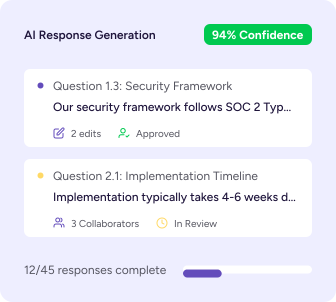
Next, the system intelligently maps each question to the approved content stored in your knowledge library. This is your single source of truth, containing everything from product specs and security information to company history. The AI then generates a complete first draft of the proposal, pulling the most relevant and up-to-date information. Your team’s role shifts from writer to editor, reviewing and refining the AI-generated draft to add that crucial human touch. The entire platform is built to make this workflow intuitive and efficient.
Creating a Strong First Draft, Not a Final Copy
A common worry I hear is that using AI will make proposals sound generic or robotic. That’s a valid concern, but it misunderstands the role of a great RFP tool. The goal isn’t to have AI write the entire proposal and hit send. Instead, think of it as your most efficient team member, the one who prepares a solid first draft for you. When used correctly, AI handles the heavy lifting by pulling accurate, approved answers from your knowledge base. This frees your team from the tedious search-and-find mission, allowing them to focus their expertise on adding strategic details, tailoring the narrative to the client's specific pain points, and infusing the document with your company’s unique voice.
The Power of Continuous Learning
The best RFP AI tools don't just stay static; they get smarter with every proposal you complete. This is where the real magic happens. As your team uses the software, it learns from your edits and selections, making its future suggestions more accurate and customized to your style. Over time, the AI becomes an expert on your company's voice and preferences. Even better, a sophisticated system like Iris can proactively flag information in your knowledge base that might be outdated, ensuring your content library remains a reliable source of truth. This continuous learning cycle means the tool becomes an increasingly valuable asset, constantly adapting to help you produce higher-quality proposals more efficiently.
Why Your Team Needs RFP AI
Let's be honest: the traditional RFP process is often a chaotic scramble to the finish line. Your team deserves better. Implementing an AI tool shifts your proposal process from reactive to proactive. Instead of just trying to meet a deadline, your team can focus on crafting a response that truly resonates with the client's needs. This means you can produce better, more tailored proposals without the late nights and last-minute stress.
One of the biggest benefits is freeing up your subject matter experts (SMEs). They no longer have to spend hours answering the same questions over and over again. With an AI tool, their expertise is captured and reused intelligently, allowing them to contribute only when new, strategic input is needed. This empowers your entire team to work more efficiently and focus on winning more deals.
Handle More Than Just RFPs
Don't let the name fool you; the best AI proposal software is built for more than just RFPs. Your team likely handles a whole suite of documents, from detailed security questionnaires (VSQs) and due diligence questionnaires (DDQs) to complex statements of work (SOWs). A truly powerful platform applies the same intelligent logic across all of them. The core function remains the same: mapping questions to your central knowledge base to generate fast, accurate answers. This means you can stop juggling different workflows for different document types and consolidate everything into one streamlined process. It transforms a collection of tedious manual tasks into a unified, strategic advantage for your entire team.
Common RFP Problems Solved by AI
RFP AI tools directly tackle the most common frustrations in the proposal process. They automate the repetitive, low-value tasks that eat up your team's time, like searching for answers, formatting documents, and performing compliance checks. This automation drastically reduces the hours spent on each proposal, allowing your team to handle a higher volume of deals without burning out.
These platforms also solve the problem of information silos. Many integrate with the tools you already use, like Salesforce and Slack, creating a connected workflow. Instead of hunting for information across different departments and systems, everything is centralized. This ensures every proposal uses consistent, accurate, and pre-approved messaging. It eliminates the risk of using outdated information and gives you confidence that every response reflects the very best of your organization, as shown in our customer stories.
Your Checklist for the Best RFP AI Software
Choosing the right RFP AI tool feels like a big decision, because it is. This software will become a core part of your sales and proposal process, so you want to find a partner that truly fits your team’s needs. The best tools go beyond simple automation; they help you create higher-quality proposals, collaborate more effectively, and ultimately win more deals. It’s not just about getting responses out the door faster, but about improving the quality and consistency of every single one.
As you evaluate your options, it’s helpful to think about the entire lifecycle of a proposal, from the initial draft to the final submission and analysis. A great tool should support your team at every stage. It should feel less like a rigid piece of software and more like an intelligent assistant that understands your content, adapts to your workflow, and provides the insights you need to improve. Focus on these key areas to ensure you’re picking a solution that will support your team now and as you grow.
Look for Smart Content Automation
The most immediate benefit of an RFP AI tool is its ability to handle repetitive, time-consuming tasks. Look for a platform that can instantly generate first drafts of proposals, format documents, and run compliance checks. This level of automation frees your team from the copy-and-paste grind, allowing them to focus on strategic tasks like tailoring responses and refining your value proposition. By automating the groundwork, you can significantly cut down the time it takes to respond to an RFP, giving your team more time to make each proposal shine and preventing burnout from tedious, manual work.
Contextual Understanding
The best AI tools don’t just match keywords; they understand context. Think about it: when an RFP asks you to “Describe your data encryption protocols,” you don’t want a generic paragraph about security. You need the specific, approved answer about encryption. A truly intelligent platform uses natural language processing to analyze the intent behind each question. It deconstructs the document and intelligently maps every requirement to the most relevant information in your knowledge library. This means the first draft your team gets is not only generated in minutes but is also highly accurate. It provides a solid foundation to build from, freeing your team to focus on strategy instead of fixing basic errors.
Build Your Single Source of Truth
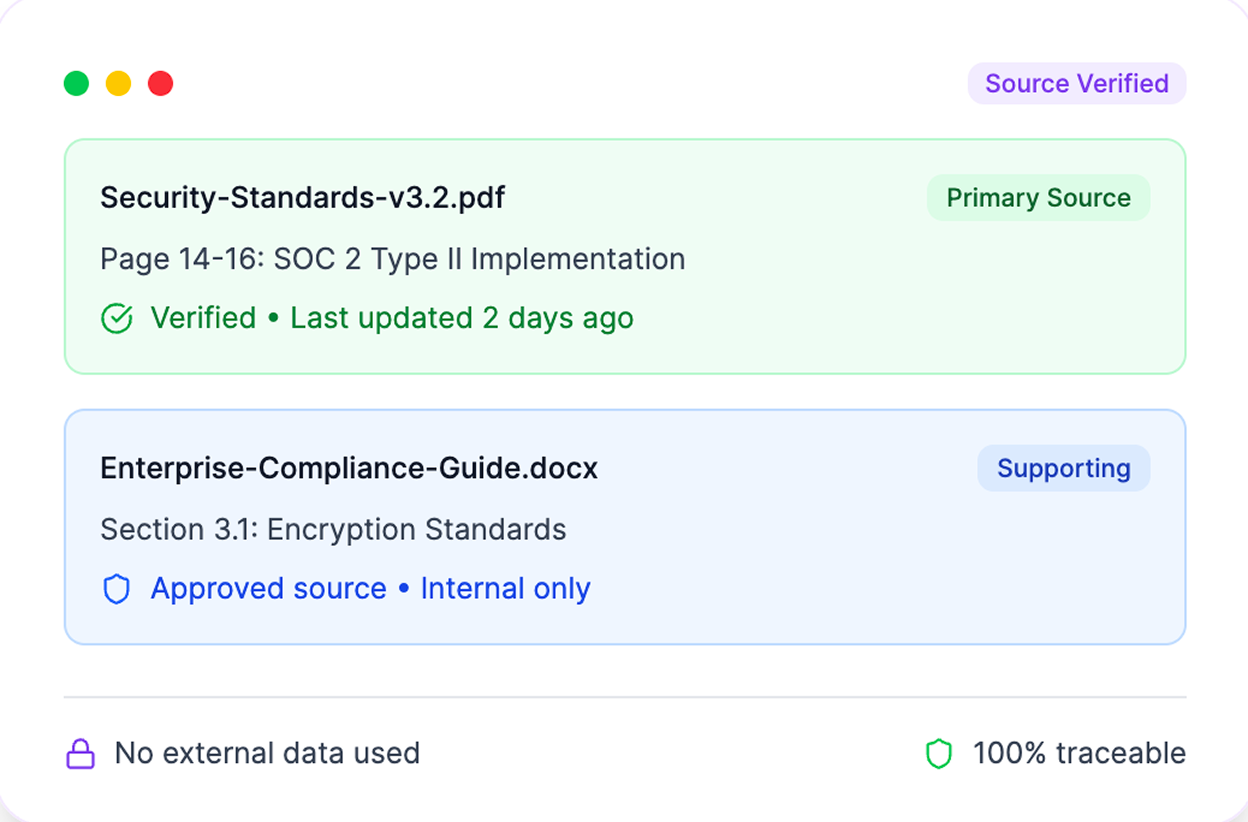
Consistency is key to a winning proposal. A great RFP AI tool acts as a centralized knowledge base, ensuring every response draws from the most current, approved information. This eliminates the risk of using outdated stats or inconsistent messaging. The software should be able to pull information from various documents and data sources, creating a single source of truth for your entire organization. This not only reduces errors but also ensures that every proposal perfectly reflects your brand and its most up-to-date capabilities, building trust with potential clients from the very first touchpoint.
Example: Automated Content Control
This is where the best tools really shine. Automated content control means the software doesn't just store your answers; it helps you manage them. Imagine a system that proactively flags information that might be outdated or needs a review from a subject matter expert. Instead of discovering an old product spec after a proposal has already been sent, the tool alerts you beforehand. This turns your knowledge library from a static folder of documents into a dynamic, reliable resource. It’s a built-in quality control process that ensures every response is built on a foundation of accurate, approved content.
This proactive approach is crucial for maintaining trust with potential clients. When your proposals are consistently accurate, it sends a powerful message that your organization is detail-oriented and reliable. It also gives your team the confidence to move quickly, knowing the information they are pulling is current and correct. This is a core component of how AI for RFPs transforms the process from a frantic document hunt into a streamlined, strategic operation that consistently produces high-quality work.
Make Team Collaboration Effortless
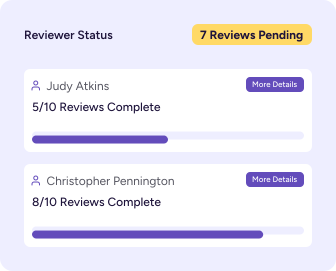
Your RFP tool shouldn't operate in a silo. The right solution will enhance your team's existing workflow by making collaboration seamless. Look for features that allow multiple team members to work on a document simultaneously, assign tasks, and leave comments. Even better, find a tool that integrates with the platforms your team already uses every day, like Salesforce, Slack, or Google Drive. When your RFP software works in harmony with your existing tech stack, you can streamline your workflows and keep everyone on the same page without adding extra steps to their process.
Measure Performance with Actionable Analytics
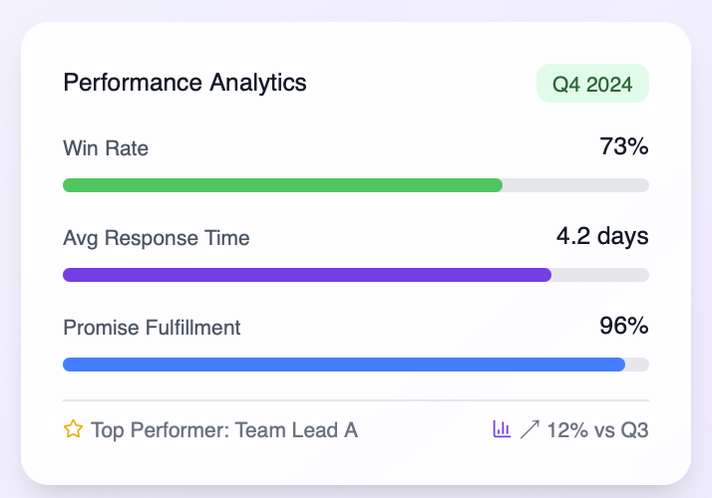
How do you know if your new tool is actually working? The best RFP AI platforms provide analytics that help you track key performance indicators. You should be able to monitor metrics like your win rate, response time, and the number of proposals you’re generating. Having access to this data is invaluable. It allows you to see what’s working, identify areas for improvement, and demonstrate the tool's return on investment to leadership. After all, the goal isn't just to be faster—it's to be more effective and win more business.
Example: Strategic Performance Tracking
Imagine your team has just finished its first quarter using a new RFP tool. Instead of relying on gut feelings, you can pull up a dashboard and see exactly what happened. The analytics show that your response time has decreased by 40%, but more importantly, your win rate for enterprise deals has climbed by 15%. You can even drill down to see which answers from your knowledge library are most associated with winning proposals. This data allows you to stop guessing and start making strategic decisions. You can identify underperforming content that needs a refresh and replicate the successful patterns across your entire team. This is what makes analytics so powerful—it provides a clear roadmap for continuous improvement and helps you refine your strategy to win more business.
Ensure Seamless Tech Stack Integration
For any new software to be successful, it needs to fit into your team’s daily routine. That’s why integrations are non-negotiable. A powerful RFP AI tool should connect effortlessly with your CRM, communication channels, and cloud storage. Unlike older tools that depend on static libraries, modern platforms like Iris use generative AI to create context-aware responses dynamically. This means the tool actively works within your ecosystem to pull the right information, saving your team from hunting down answers and allowing them to focus on strategy.
Prioritize Security and Compliance Features
When you’re handling sensitive company and client information, security is paramount. A trustworthy RFP AI tool must have robust security features to protect your data. Look for platforms that are transparent about their security protocols and compliance certifications, such as SOC 2 or GDPR. It’s essential to choose a vendor that prioritizes data privacy and helps you build trust with both your internal stakeholders and your clients. Don't be afraid to ask tough questions about how your data will be stored, managed, and protected.
Look for SOC 2 and ISO 27001 Certifications
Think of certifications like SOC 2 and ISO 27001 as a background check for your software vendor. They are independent verifications that a company has rigorous security policies and practices in place to protect your information. When you’re uploading sensitive proposal content—including pricing, client details, and proprietary strategies—you need assurance that the platform is secure. These certifications aren't just fancy badges; they prove that a vendor is committed to safeguarding your data against unauthorized access and breaches. Make sure any tool you consider has these credentials, as it’s a clear indicator of their commitment to security.
Confirm Your Data Privacy Policies
With any AI tool, it's fair to ask: where does my data go? You need a concrete guarantee that your company's private information will not be used to train public AI models. A reputable RFP AI provider will be crystal clear on this point. Their privacy policy should explicitly state that your content is used only to serve you and is never shared or used to train external models. This ensures your confidential business information, product details, and client communications remain completely private. Before signing any contract, get confirmation on their data privacy policies to protect your intellectual property.
An Honest Comparison of AI Tech RFP Tools
Choosing the right RFP AI tool can feel like a big decision, but it doesn't have to be complicated. The market is full of excellent options, and the best one for you really comes down to your team’s unique needs, goals, and current processes. Some tools excel at creating a central library for all your best content, while others use advanced AI to generate new responses from scratch. You’ll also find differences in how they integrate with other software and help your team collaborate.
Think of this as a tour of the top contenders. We’ll walk through what makes each platform stand out so you can get a clear picture of which one might be the perfect fit for your workflow. Whether you’re a small team trying to respond to your first big RFP or a large enterprise juggling dozens of proposals at once, there’s a solution here that can help you streamline your work and win more deals. Let's look at some of the leading RFP AI tools available today.
Key Differentiators to Look For
As you explore the market, you'll notice that "AI-powered" is a label everyone uses. But what's under the hood can vary dramatically. Understanding a few key distinctions will help you see past the marketing buzz and find a tool that truly works for your team. It’s about knowing what to look for, from the tool's foundational technology to how you can test it out before making a commitment. These differences will have a major impact on how effectively the software integrates into your workflow and the results you see.
Legacy Platforms vs. AI-First Tools
The first major difference you'll encounter is between legacy platforms and AI-first tools. Many established software companies are now adding AI features to their existing products to keep up with the market. On the other hand, newer tools were built from the ground up with AI at their core. This isn't just a technical detail; it often means the AI is more deeply integrated and capable. An AI-first approach means the entire workflow is designed around intelligent automation, rather than having AI features feel like an add-on. This can lead to a more seamless, intuitive, and powerful user experience.
AI Assistants vs. AI Agents
Another important distinction is whether a tool functions as an AI assistant or an AI agent. Think of an AI assistant as a helpful co-pilot; it suggests answers, helps you rewrite a sentence, or finds relevant content, but you’re still doing the driving. An AI agent, however, is more like an automated team member. You can give it a specific task, like generating the first draft of a security questionnaire, and it can complete it on its own. For teams looking to maximize efficiency, understanding this difference is crucial. An agent can take on more of the heavy lifting, freeing up your team for high-level strategic work.
Availability of Free Trials
Finally, don't underestimate the value of a free trial. The best way to know if a tool will work for your team is to actually use it. A company that offers a free trial is showing confidence in its product and giving you a risk-free opportunity to see if it fits your workflow. Look for trials that give you full access to the platform's features without requiring a credit card upfront. This allows your team to test the software with a real RFP and see the results for themselves. It’s the ultimate litmus test to ensure you’re making an investment that will deliver real value.
HeyIris.ai
Iris leads the way with an AI-powered platform designed for efficiency and accuracy. Unlike legacy tools that rely on static content libraries and a lot of manual input, Iris uses generative AI to dynamically create precise, context-aware responses. This approach is a game-changer because it moves beyond simple search-and-replace functions. The AI understands the nuances of each question and crafts answers that are tailored to the specific RFP. This eliminates repetitive work and frees up your team to focus on high-level strategy instead of copy-pasting. The platform’s proactive features also identify and flag outdated information across your systems, ensuring every proposal is current and accurate.
Loopio
Loopio is a well-known name in the RFP space, helping teams respond to RFPs, RFIs, and security questionnaires more quickly. Its AI-powered software can help you create accurate first drafts in minutes, not days, by intelligently sourcing answers from your content library. One of its standout features is the ability to edit your work based on over 70 different rules that are designed to lead to winning proposals. This makes it a strong choice for teams that want to enforce consistency and quality control across all their responses while still speeding up the initial drafting process.
RFPIO
RFPIO is an established RFP response automation platform that excels at bringing order to the proposal process. It acts as a central repository for all your response content, making it a single source of truth for your entire organization. This is especially helpful for large teams or companies that deal with a high volume of complex proposals and need to ensure everyone is using the most up-to-date and approved information. By centralizing content and streamlining the proposal workflow, RFPIO helps teams collaborate more effectively and maintain brand consistency across every document.
Responsive
Responsive, which was formerly known as RFPIO, puts a strong emphasis on measurable results. The platform reports that teams using its AI RFP software see a 16 percent higher win rate and generate 34 percent more revenue. By automating tedious parts of the response process, the tool gives valuable time back to your team. This allows your organization to respond to more opportunities without compromising on quality or needing to increase headcount. For sales leaders focused on ROI and clear performance metrics, Responsive makes a compelling case by directly tying its features to bottom-line business growth.
Ombud
Ombud’s platform is built around automating the RFP response process to help teams manage proposals more efficiently. A key strength of Ombud is its focus on deep integration with the tools your team already uses, like Salesforce and other CRMs. This allows for a more seamless flow of information and enhances collaboration by meeting your team where they already work. By connecting different parts of your sales and proposal workflow, Ombud helps reduce friction and ensures that everyone involved in the response has the context they need to contribute effectively.
VT Docs
VT Docs offers a unique and user-friendly approach to managing RFPs. The platform is designed to simplify the proposal process from start to finish, making it accessible even for teams that are new to response automation software. Its features include tools that help you quickly shred and analyze RFP documents to identify key requirements and potential risks. With automated content generation and straightforward collaboration tools, VT Docs helps teams work together seamlessly, ensuring that every proposal is compliant, compelling, and submitted on time.
Specialized Tools for Niche Needs
While many RFP AI tools are designed to be versatile, some are built with a specific purpose in mind. The best choice for your team might not be the one with the most features, but the one that’s perfectly tailored to your industry or the types of documents you handle most often. For example, a government contractor has vastly different compliance needs than a creative agency focused on visually stunning proposals. Understanding these nuances is key to finding a tool that doesn’t just speed up your process but actually makes your responses more effective. Let's look at a few specialized categories to see if your team fits into one of these niche use cases.
For Security Questionnaires
If your team spends a significant amount of time on security questionnaires, Vendor Security Questionnaires (VSQs), or Due Diligence Questionnaires (DDQs), a specialized tool can be a lifesaver. These documents are notoriously detailed and repetitive, and a single incorrect answer can put a deal at risk. Tools in this category are designed for quickly and accurately answering these questionnaire-style documents. They excel at maintaining a secure and meticulously organized library of pre-approved answers related to compliance standards like SOC 2, ISO 27001, and GDPR. This makes them a top choice for tech and software companies where data security is a critical part of the sales process.
For Government Contractors
Responding to government RFPs is a discipline all its own. The process is governed by strict regulations, complex compliance requirements, and rigid formatting rules. For government contractors who need full automation for their proposal process, specialized AI tools are essential. These platforms are built to handle the unique challenges of public sector bids, with features designed to manage compliance matrices, track FAR clauses, and ensure every submission detail is perfect. While this impressive technology can sometimes be more complex to set up, the payoff is a streamlined workflow that helps you navigate the intricate world of government contracting with confidence.
For Microsoft Office Power Users
Some teams live and breathe in Microsoft Office. For them, the idea of adopting a completely new, separate platform can feel disruptive. That’s where RFP tools built to work directly inside Microsoft Word come in. These are often older, more established tools designed for teams that prioritize strict formatting and adherence to existing workflows. They typically function as a Word add-in, allowing users to access a content library and populate a document without ever leaving their familiar environment. This approach is best for organizations that are highly focused on compliance and formatting control and prefer to leverage their existing Microsoft expertise.
For Visually-Focused Proposals
When your proposal’s design is as important as its content, a standard document just won’t cut it. For creative agencies, consultants, and other visually-driven businesses, specialized tools can create interactive, web-based proposals that truly stand out. These platforms move beyond the static PDF, allowing you to embed videos, create dynamic pricing tables, and build a more engaging experience for the client. Because they often combine the proposal, quote, and e-signature into one seamless package, they are visually impressive and can significantly shorten the sales cycle. They are typically quick to set up and focus on making your brand look its best.
For Procurement Teams
It’s important to remember that RFP software isn’t just for the teams responding to bids. There are also platforms designed for the procurement teams that issue them. These tools are for small and mid-sized organizations that want an all-in-one solution to manage the entire bidding process from their side of the table. Instead of focusing on deep RFP analysis or writing long proposals, these platforms provide features for creating and distributing RFPs, managing vendor communications, and evaluating submissions in a structured way. They help bring order and transparency to the procurement cycle, making it easier to find the right partner.
How to Find the Best AI Tool for Answering RFPs
Picking the right RFP AI tool feels like a big decision because it is. This software will become a core part of your sales and proposal process, so you want to get it right. The good news is that finding the perfect fit isn't about finding a magical, one-size-fits-all solution. It’s about clearly understanding your team's unique challenges and goals and matching them to the right features. Think of it as a partnership—you need a tool that will grow with you. By breaking down the decision into a few key areas, you can move forward confidently and choose a platform that empowers your team to win more deals.
Define Your Team's Core Needs
Before you even look at a demo, start with a little internal discovery. What are the biggest hurdles in your current RFP process? Are you spending too much time hunting for answers in old documents? Is maintaining brand voice and accuracy a constant struggle? Get specific about your pain points. Organizations that successfully implement AI see the most significant benefits when they target their most pressing issues. Your goal is to create better proposals tailored to each client's specific needs, so find a tool that directly solves the problems standing in your way. A clear "why" will make it much easier to evaluate your options.
Outline Your Technical Must-Haves
Once you know your goals, you can create a checklist of must-have features. At its core, RFP AI uses technology like natural language processing and generative models to automate responses. It should be able to analyze RFP documents, understand the questions being asked, and pull the best answers from your content library to create a solid first draft. Think about your ideal workflow. Do you need a tool that can handle complex security questionnaires and SOWs in addition to RFPs? Make a list of your non-negotiables before you start comparing platforms. This will help you cut through the marketing noise and focus on the capabilities that truly matter to your team.
Talk About Budget and Pricing Models
Let's talk about money. While pricing is obviously a factor, try to think in terms of value and return on investment, not just cost. The right RFP AI software gives your team back its most valuable resource: time. By automating the tedious parts of the proposal process, you allow your team to focus on strategy and customization, getting more done without needing to add headcount. When you evaluate pricing models, consider how much time your team currently spends on RFPs and what that time is worth. A tool that helps you respond to more deals and improve your win rate often pays for itself very quickly.
Typical Costs and Setup Fees
It’s important to go into your search with a realistic budget in mind. The cost of RFP AI software can vary widely, but it’s a significant investment. For example, the typical annual cost for a platform like Loopio is around $22,786, with a range from about $11,000 to over $55,000. On top of the subscription, you should also plan for initial setup and training fees, which can run anywhere from $5,000 to $50,000. While these numbers might seem high, remember to frame them as an investment. The right tool will deliver a clear return on investment by freeing up your team’s time, increasing your proposal capacity, and improving your win rate.
Common Pricing Structures
You’ll find that pricing for these tools isn't always straightforward. As one comparison guide notes, "Pricing varies greatly: Some tools offer clear, monthly pricing, while others are expensive enterprise solutions with custom quotes and long contracts." Common models include per-user pricing, tiered plans based on the number of proposals or features, and custom quotes for enterprise-level needs. The best approach is to find a vendor that works with you to understand your specific workflow and team size. This ensures you’re not paying for features you don’t need or hitting a usage cap that stifles your growth. Look for a partner who is transparent and willing to tailor a plan to your goals.
The Power of Negotiation
Don't be afraid to negotiate. The price you see on a website or in an initial quote is often just a starting point. In the world of B2B software, there’s usually some flexibility. In fact, buyers who negotiate pricing can often save around 9% on their final contract. Before you get on a call, do your homework. Understand your must-have features, your budget, and the value you expect to get from the tool. Ask about discounts for multi-year contracts, bundled services, or paying annually instead of monthly. A good vendor wants to build a long-term partnership, and a fair price is the foundation of that relationship.
Don't Forget Your Integration Needs
A new tool should make your life easier, not create another silo of information. How will this platform fit into your current tech stack? A seamless workflow is essential for adoption and efficiency. Many RFP AI platforms can integrate with tools you already use every day, like Salesforce, Slack, or Google Drive, ensuring your team can work without constantly switching between applications. Before you commit, map out your existing workflows and confirm that the solution you’re considering can connect to your key systems. This ensures a smoother transition and helps your team get up to speed faster.
Choose a Tool That Can Scale With You
The tool you choose today should be able to support your team tomorrow. As your company grows, your proposal volume will likely increase, and the complexity of your RFPs might change, too. Think about your long-term vision. Will this software scale with you? Look for a partner that is continuously innovating and improving its platform. Implementing AI in your RFP process is a strategic move that can revolutionize how your team operates. Choose a solution that not only solves your current problems but also provides a foundation for future success, allowing you to adapt and grow with confidence.
A Smooth Rollout: Implementing Your New RFP AI Tool
Choosing the right RFP AI tool is a huge step, but the real magic happens during implementation. A thoughtful rollout can make the difference between a tool that gathers dust and one that transforms your sales process. Let’s walk through the key steps to get your new software up and running smoothly so your team can start winning more deals, faster.
Build and Organize Your Knowledge Base
Your AI is only as smart as the information you give it. The first and most critical step is to build a comprehensive knowledge base. This centralized library is where the AI will pull answers from, using its technology to analyze RFP questions and map them to your approved content. Start by gathering your best-performing proposal responses, product descriptions, security documents, and case studies. Clean them up, make sure they’re current, and organize them logically. A well-curated knowledge base is the foundation for generating accurate, high-quality first drafts, letting your team focus on strategy instead of searching for information.
Get Your Team On Board with Training
A new tool can feel disruptive, so getting your team on board is essential for success. The goal is to make everyone feel confident and excited about the change, not overwhelmed by it. Many AI RFP tools offer free trials or demos—use these to let your team see the software in action on a real proposal. Schedule dedicated training sessions that go beyond features and focus on how the tool fits into their daily workflow. Consider appointing a "super user" who can act as a go-to resource for questions. A smooth adoption process ensures your investment pays off by empowering your team to use the tool to its full potential.
Create Workflows That Actually Work
To avoid confusion, you need to define exactly how the new tool will fit into your existing proposal process. Before you go live, map out the entire workflow from start to finish. Who is responsible for uploading a new RFP? Who initiates the AI-powered draft? Who reviews and refines the content, and who gives the final sign-off? Running a small pilot program with a few team members on a real RFP can help you validate and refine these steps. Establishing these clear roles and processes ensures that every proposal moves forward efficiently, without any bottlenecks or guesswork.
Keep Your Content Fresh and Accurate
An AI RFP tool gives your team precious time back, but that doesn’t mean you can set your knowledge base and forget it. Your content needs to be a living, breathing resource. Products evolve, messaging gets updated, and new success stories emerge. Schedule regular check-ins—quarterly is a good starting point—to review and refresh your content library. Proactively updating your information ensures that your AI is always pulling from the most accurate and persuasive material. This commitment to content quality means your proposals will always be sharp, relevant, and ready to win.
Track Your Progress and Key Metrics
How do you know if your new tool is actually working? By measuring what matters. Before you implement your RFP software, establish baseline metrics for your current process. Track key performance indicators (KPIs) like the average time it takes to complete a proposal, the number of RFPs your team can handle per month, and, of course, your win rate. Once the tool is live, continue to monitor these numbers. Seeing the data-driven impact—like a faster sales cycle or a higher win rate—not only proves the tool’s ROI but also helps you identify opportunities to further optimize your process.
Set Up Clear Data Governance Rules
When you’re handling proposals, you’re dealing with sensitive company and client information. Data governance isn't just an IT concern; it's a matter of trust. Be sure you understand your AI tool’s security protocols and how it handles your data. Work with your IT department to confirm that the platform meets your organization's compliance standards. It’s also important to be transparent with your team and other stakeholders about how the system works and the measures in place to protect sensitive information. Strong data governance builds confidence and ensures you’re handling every proposal responsibly and securely.
From Good to Great: Getting More From Your RFP AI
Once you’ve chosen and implemented an RFP AI tool, the next step is to make sure you’re getting every bit of value from your investment. This isn't just about responding to proposals faster; it's about fundamentally changing how your team approaches the entire process. A great tool becomes an extension of your team, handling the repetitive work so your experts can focus on strategy and personalization.
By leaning into the capabilities of your new software, you can transform your RFP process from a reactive, time-consuming chore into a proactive, revenue-generating machine. The key is to understand the full scope of benefits and build your workflows around them. From automating tedious tasks to delivering higher-quality proposals, the right approach will not only make your team more efficient but also more effective. Let’s look at the specific advantages you can expect and how to make them a reality.
Win Back Time and Reclaim Resources
Think about the hours your team spends searching for answers, copying and pasting from old documents, and reformatting content. It’s a drain on time and morale. RFP AI gives those hours back. These tools can automate repetitive tasks like generating first drafts and checking for compliance, which drastically cuts down the manual effort required for each proposal. Instead of getting bogged down in administrative work, your team can spend their time personalizing responses, building relationships, and focusing on the strategic elements that actually win deals.
How AI Reduces Response Times
The most significant impact of AI on the proposal process is the dramatic reduction in response time. Instead of spending days or weeks manually searching for answers and assembling documents, teams can generate a complete first draft in a fraction of the time. Some proposal managers report delivering responses up to 80% faster. This is possible because RFP AI tools automate the most tedious, time-consuming parts of the job. The software handles the heavy lifting of parsing the RFP, finding the right answers in your knowledge base, and formatting the document, freeing your team to focus on what really matters: tailoring the proposal, refining the strategy, and building a stronger connection with the potential client. This shift can improve overall team efficiency by more than 70%, turning a stressful, last-minute scramble into a smooth, strategic process.
Deliver Higher-Quality, More Accurate Proposals
Nothing undermines a proposal faster than an outdated statistic or an inconsistent answer. Human error is inevitable when you’re working under tight deadlines. AI acts as your quality control, ensuring every response is accurate and consistent. AI-driven content retrieval pulls answers from the latest approved sources, reducing the risk of mistakes. This means your proposals are not only polished and professional but also built on a foundation of trustworthy, up-to-date information, which helps you build credibility with potential clients from the very first page.
Start Increasing Your RFP Win Rate
Faster, more accurate proposals naturally lead to better outcomes. When you can turn around a high-quality RFP in a fraction of the time, you make a strong impression on evaluators and can often get ahead of the competition. The data backs this up: teams that standardize on a leading RFP AI solution see significantly higher win rates. By consistently submitting well-crafted, tailored proposals, you position your company as a reliable and professional partner, which is a major factor in the final decision. You can see how other teams have achieved this through various case studies.
Quantifying the Impact on Win Rates
Let's get specific about the numbers. The impact of AI on your win rate isn't just a vague promise; it's a measurable outcome. The data shows that teams using leading AI RFP software see a significant improvement. For example, some platforms report a 16 percent higher win rate. This increase happens because the technology fundamentally changes where your team invests its energy. By automating the low-value tasks of finding and formatting answers, the software frees up your experts to focus on what truly persuades evaluators: crafting a compelling narrative, deeply understanding the client’s needs, and tailoring your solution to solve their specific problems. You're not just submitting proposals faster; you're submitting smarter, more strategic proposals that stand out from the competition.
How to Gain a Real Strategic Advantage
When your team isn't buried in the tactical details of proposal creation, they have the bandwidth to think more strategically. RFP AI tools are transforming how teams create proposals by automating and enhancing the content creation process. This efficiency gives your experts the space to analyze the client’s needs more deeply, craft a more compelling narrative, and tailor the solution to solve their specific problems. This shift from reactive document-filling to proactive solution-selling is what separates good proposals from winning ones.
Is It Worth It? Running a Cost-Benefit Analysis
If you’re trying to make the case for an RFP AI tool, let the numbers do the talking. A great place to start is by calculating the return on investment to see how much your manual process is truly costing you. Track the number of hours your team spends on each proposal and multiply that by their hourly cost. When you compare that figure to the price of an AI solution, the business case often makes itself. This simple analysis can highlight the hidden costs of inefficiency and show how a tool like Iris isn't an expense but an investment in growth.
Future-Proof Your RFP Process
Choosing and implementing an RFP AI tool is a huge step forward, but it’s not the final one. The world of sales and technology is always changing, and your RFP process needs to keep up. Future-proofing isn't about predicting what's next with a crystal ball; it's about building a process that's flexible, adaptable, and ready for anything. It means committing to a mindset of continuous improvement and staying aware of the landscape around you. By doing so, you ensure that your investment in an RFP tool continues to pay dividends, keeping your team efficient and your proposals competitive for years to come.
Stay Curious About New AI Technology
The right technology can completely change how your team approaches proposals. AI tools are constantly evolving, shifting the focus from tedious, manual tasks to high-impact strategic work. Instead of getting bogged down in finding and formatting answers, your team can spend more time understanding client needs and crafting compelling narratives. As you settle in with your new software, make it a habit to stay informed about new features and capabilities. Following industry blogs and updates from your software provider can give you a heads-up on what’s next. This proactive approach ensures you’re always using the best tools available, which is key to redefining the entire process of creating winning proposals.
The Rise of Predictive AI
The next big step for RFP software goes beyond just writing responses. We're talking about predictive AI. Imagine a tool that analyzes all your past proposals—the wins, the losses, and everything in between—to spot patterns. It acts like a strategic advisor, giving you a clear idea of your chances of winning a deal before you even commit your team's time. This allows you to make smarter decisions about which RFPs are worth pursuing. Instead of chasing every opportunity, you can focus your energy on the bids you're most likely to win, turning your proposal process into a true strategic advantage.
Keep a Pulse on Industry Trends
Automation is more than just a buzzword; it’s a core component of a modern RFP strategy. The trend is moving toward systems that streamline workflows, minimize human error, and make team collaboration seamless. By automating the repetitive parts of proposal creation, you free up your team for more strategic thinking. Keep an eye on how other companies are using automation to their advantage. Are they integrating their RFP software with other tools in their tech stack? How are they using it to manage content and track performance? Understanding these trends helps you see what’s possible and ensures your own processes don’t become outdated. Well-implemented automated tools can drastically reduce the time it takes to build and manage proposals.
Build a Culture of Continuous Improvement
Your RFP process should never be set in stone. The best way to future-proof it is to build a strategy for ongoing refinement. Schedule regular check-ins with your team to discuss what’s working and what isn’t. Are there bottlenecks in your workflow? Is your content library up-to-date and easy to search? Don’t be afraid to experiment. Many AI RFP tools offer free trials or demos, which are perfect for testing new features on sample RFPs without disrupting your live workflow. By making a conscious effort to implement AI in the RFP process thoughtfully and iteratively, you can create a system that gets better with every proposal you submit.
How to Adapt and Grow with Your Tool
The RFP AI tool you choose should be a partner in your growth, not a static piece of software. As your company evolves, your needs will change. You might expand into new markets, launch new products, or grow your sales team. Your RFP software needs to scale with you. Look for a tool that continuously improves its features, especially in areas like content retrieval and data integration. The best systems use AI to ensure your answers are always pulled from the most current, approved sources. This adaptability is key to maintaining consistency and accuracy as your knowledge base expands, helping you transform your proposal process over the long term.
Related Articles
- AI for RFPs: The Ultimate Guide
- Best RFP Software for Small Businesses (2025 Guide)
- Mastering RFP Responses with AI Efficiency
Frequently Asked Questions
Will an AI tool replace my proposal team? Not at all. Think of an RFP AI tool as a powerful assistant, not a replacement. Its job is to handle the repetitive, time-consuming tasks like searching for answers and formatting documents. This frees up your team to focus on the high-value work that truly wins deals, like refining strategy, tailoring the narrative to the client's specific needs, and adding that crucial human touch. The goal is to empower your experts, not make them obsolete.
How much effort does it take to get started with the knowledge base? Setting up your knowledge base is the most important part of the implementation, and it does require some upfront effort. You'll start by gathering your best and most recent content—think past proposals, security documents, and product specs. The good news is that a modern platform will help you organize this information efficiently. The initial time you invest pays off quickly by creating a single source of truth that saves countless hours on every future proposal.
What's the real difference between a basic RFP tool and one with generative AI? A basic tool typically functions like a sophisticated search engine, finding and suggesting answers from your content library that you then have to piece together. A tool with generative AI, like Iris, goes a step further. It doesn't just find information; it understands the context of the question and dynamically crafts a precise, well-written response. This means you get a much more complete and relevant first draft, which significantly reduces editing time.
Can these tools handle highly specialized or technical RFPs? Yes, they are designed for complexity. Because the AI learns from your specific content, it can handle technical jargon, detailed security questionnaires, and industry-specific requirements with impressive accuracy. The key is feeding it high-quality, specialized information during setup. The AI then uses that expert knowledge to generate relevant answers, allowing your subject matter experts to simply review and approve rather than write from scratch every time.
How can I prove the value of an RFP AI tool to my leadership? Focus on the data. Before you implement a tool, track your current metrics: how many hours your team spends per proposal, your current win rate, and how many RFPs you can respond to in a quarter. After implementing the tool, you can show a direct comparison. Presenting clear data on reduced response times, increased proposal volume, and a higher win rate makes a powerful business case that connects the investment directly to revenue and efficiency.
Share this post
Link copied!