
Best AI RFP Response Software for 2026
April 20, 2026
By
Evie Secilmis


Best AI RFP Response Software for 2026
If your team is evaluating RFP automation in 2026, the market has never been more crowded or more capable. AI proposal writing tools have moved well beyond keyword matching and template libraries. The leading platforms now generate full draft responses, enforce governance through approval workflows, and integrate directly into the systems your team already lives in. This roundup cuts through the noise with a criteria-led comparison designed for bid and tender teams who need to make a confident, defensible choice.
What to Look for in an RFP Response Generator
Not all AI proposal writing tools are built for the same buyer. Procurement professionals managing competitive bids, proposal managers coordinating multi-author responses, and sales engineers handling security questionnaires all have different requirements. Before reaching a shortlist, clarify:
- Does the tool generate full responses or surface content for humans to assemble?
- How does it handle proprietary content and knowledge management?
- What does the approval and review workflow look like?
- Which integrations are native versus requiring a third-party connector?
- How does it handle portal-based questionnaires, not just document-based RFPs?
Teams that get clear on these questions before they demo tend to move through evaluation faster. The Iris glossary is a useful reference for anyone getting up to speed on RFP terminology.
Top RFP Automation Platforms in 2026
Iris AI: Best for End-to-End Workflow
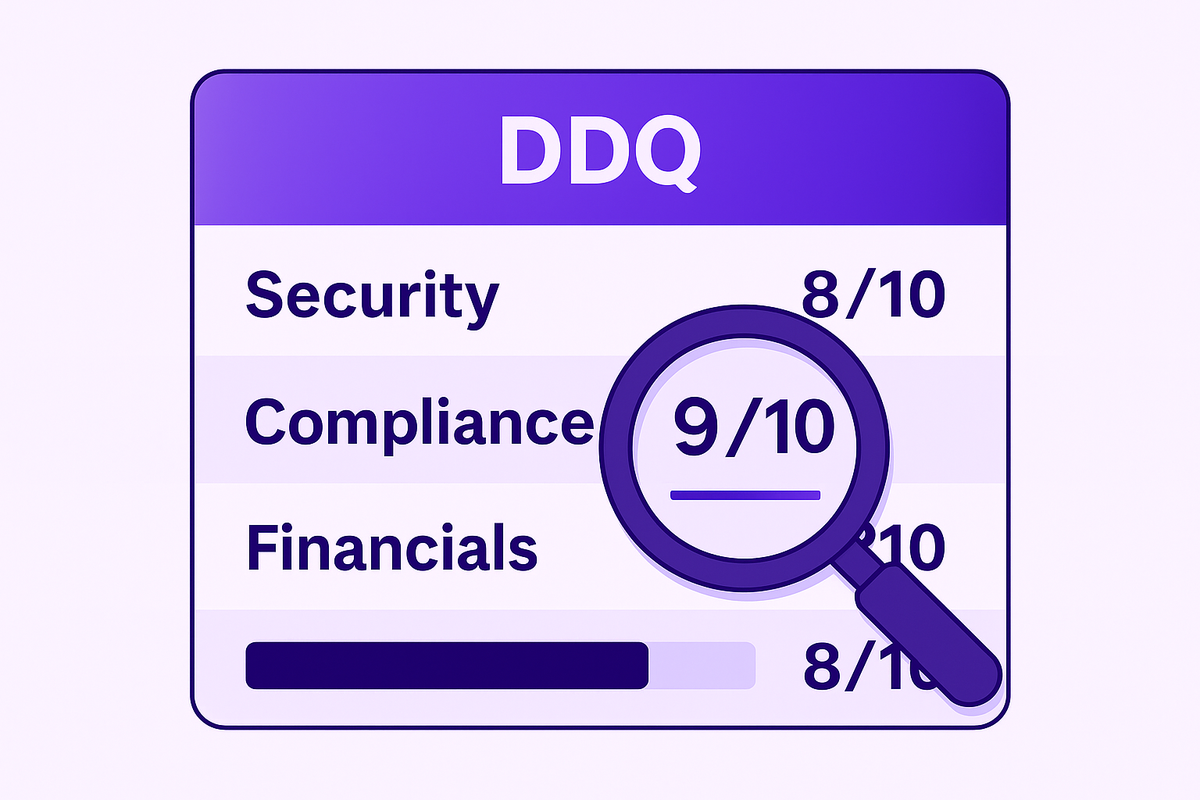
Iris is the strongest all-in-one option for enterprise teams that need proposal management, security questionnaire automation, DDQ handling, and portal autofill in a single platform. Its AI is grounded in your Approved Answer Library, which means every generated response is traceable to a vetted source. Teams do not have to choose between speed and accuracy.
Key differentiators for bid and tender teams:
- Proactive proposal generation from prospect and deal context
- Direct portal autofill for Whistic, BitSight, OneArch, Navex One, and others
- Structured approval workflows with SME assignment
- Audit-ready versioning for compliance and procurement review
- Native integrations with Salesforce, Slack, SharePoint, Google Drive, and more
Customer results include a 60% faster response time at BuildOps and a reduction from weeks to hours at Corelight. Explore Iris customer results.
Responsive: Best for Established Enterprise Procurement
Responsive (formerly RFPIO) is a mature platform with strong name recognition in procurement. Its content library and workflow tools are well-developed, and its integrations cover most enterprise tech stacks. Teams that need a vendor with a long track record and established procurement credibility often select it. The AI generation layer is less differentiated than newer platforms, and governance setup requires hands-on configuration.
Loopio: Best for Proposal Management Teams
Loopio is a solid choice for proposal managers who prioritize clean content organization over AI depth. Its library management UX is among the best in the category, and it handles multi-author workflows clearly. For teams whose primary challenge is content organization rather than AI-generated drafts, it delivers well. Portal coverage and proactive generation are not strengths.
Arphie: Best for Leaner Teams Getting Started
Arphie is an AI-native tool designed for faster onboarding and lighter implementation. It works well for smaller proposal teams or those earlier in their automation journey. Enterprise teams that need complex approval chains, compliance controls, and high-volume portal autofill will outgrow it quickly.
Inventive AI: Best for Security-Heavy Use Cases
Inventive AI is focused primarily on DDQ and security questionnaire automation. Teams in highly regulated industries that spend most of their proposal time on security documentation will find it well-matched. For full RFP lifecycle management or bid and tender workflows, it does not cover the full scope.
Comparing Platforms on Key Criteria
Here is how the top platforms stack up across the criteria that matter most for bid and tender teams:
- AI generation depth: Iris and Arphie generate full drafts. Responsive and Loopio surface content for human assembly.
- Governance controls: Iris and Responsive offer structured approval workflows. Arphie is lighter on compliance tooling.
- Portal autofill: Iris covers the broadest range of vendor portals natively.
- Integrations: Responsive and Iris have the deepest native integration libraries.
- Implementation time: Iris and Arphie onboard fastest. Responsive and Loopio require more configuration time.
How AI Proposal Writing Changes the Bid and Tender Workflow
Traditional bid and tender management involves a cycle of hunting down subject matter experts, chasing document versions, and reformatting answers for each new RFP format. AI RFP software breaks that cycle by:
- Generating a first draft automatically from your content library
- Routing unanswered questions to the right SME without manual triage
- Keeping a version history of every answer submitted
- Flagging answers that reference outdated certifications or policies
The result is a team that spends its time on strategy and differentiation, not document formatting. See how different proposal teams apply this workflow.
Frequently Asked Questions
What is an RFP response generator?
An RFP response generator is software that automatically drafts answers to RFP questions using AI, pulling from a library of approved content. The best tools generate full responses grounded in vetted sources, flag gaps for human review, and support approval workflows before submission.
How does RFP automation handle compliance requirements?
Leading platforms maintain version-controlled answer libraries with source attribution. Every generated response can be traced back to its source document, and approval workflows require sign-off before anything is submitted. This creates an audit trail that procurement and legal teams can rely on.
Can RFP software handle bid and tender responses?
Yes. Platforms like Iris are designed for complex, high-stakes response workflows that include bid and tender requirements. This includes multi-author coordination, approval chains, portal submissions, and version control across long evaluation timelines.
What integrations should I look for?
At minimum: your CRM (Salesforce or HubSpot), cloud storage (Google Drive or SharePoint), and communication tools (Slack or Teams). If your team handles portal-based questionnaires, native portal autofill support is a significant time saver.
How do I build a shortlist of RFP automation tools?
Start with your must-haves (portal coverage, governance controls, specific integrations) and eliminate tools that do not meet them. Then demo the remaining options with a real RFP you have handled recently. Measure time to first draft, accuracy rate, and ease of review workflow.
Making Your Decision
The best AI RFP response software for 2026 depends on where your team spends the most time and which gaps are most costly. For teams that need full coverage, from proposal generation through portal submission and audit-ready delivery, Iris is the platform built for it.
To see it with your own content, book a 30-minute demo with the Iris team.
Share this post
Link copied!







_EasiestToDoBusinessWith_EaseOfDoingBusinessWith.svg)
_HighPerformer_HighPerformer.svg)




_BestSupport_QualityOfSupport.svg)


